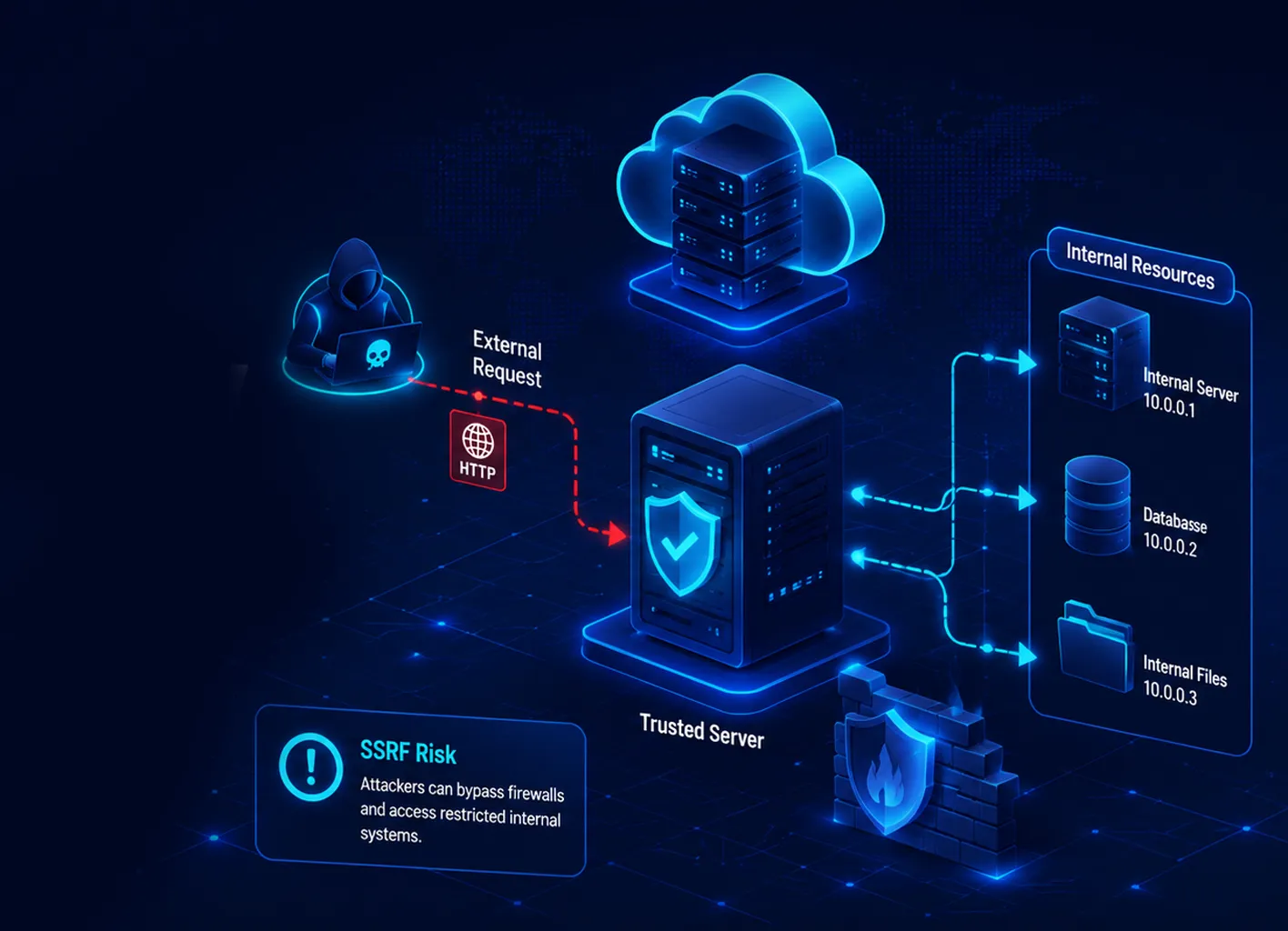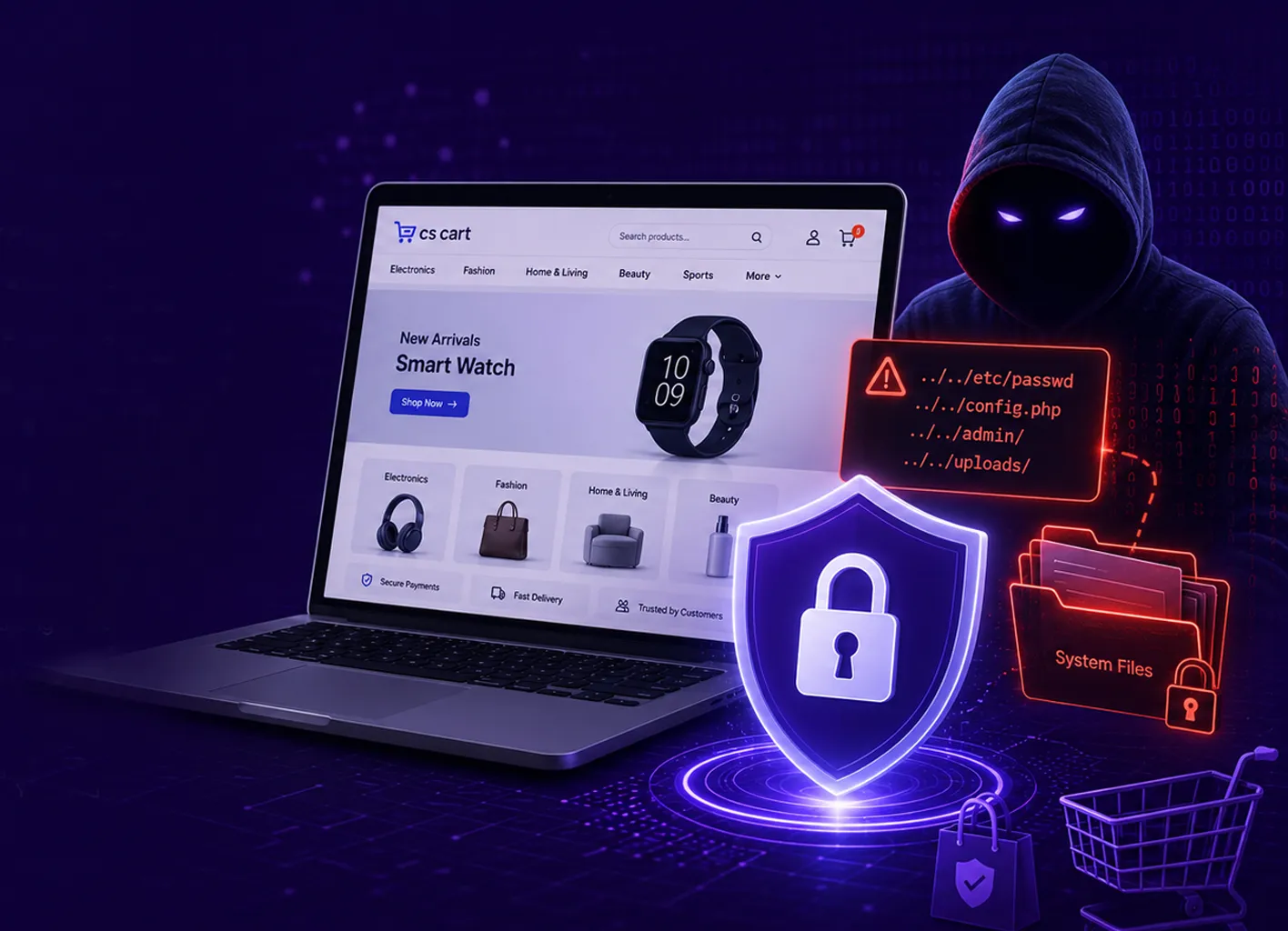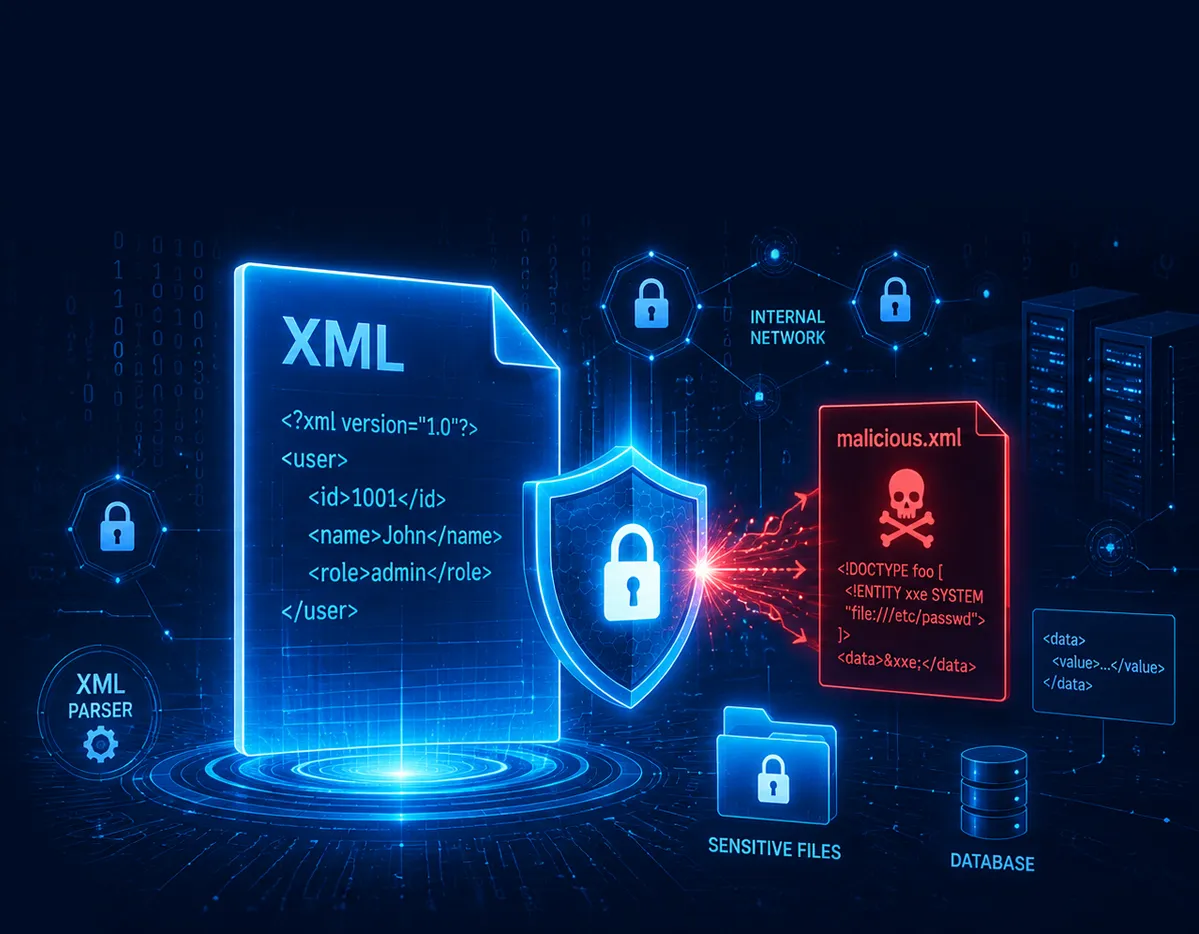
Detect and eliminate XML External Entity (XXE) vulnerabilities before they expose sensitive files, compromise backend systems, or create security risks.
Our security team has audited and hardened 100+ CS-Cart stores and Multi-Vendor marketplaces. We specialise in vulnerability assessments, secure add-on development, and long-term security posture improvement for eCommerce businesses.
Running a successful eCommerce business involves more than managing products and processing orders. Your online store also handles valuable customer information, order details, user accounts, and business-critical data every day. Protecting this information is essential for maintaining customer trust and ensuring smooth business operations.
One of the more overlooked web application security risks is XML External Entity (XXE) Injection. If left unaddressed, this vulnerability can expose sensitive files, internal systems, and business data, and create serious security concerns for online businesses.
Whether you operate a CS-Cart shopfront, multi-vendor marketplace, or custom e-commerce solution, understanding XXE injection risks and implementing proactive security measures is crucial for long-term business success.
XXE injection is a web application security vulnerability that occurs when an application parses XML input without properly restricting references to external entities.
Many eCommerce platforms process XML behind the scenes — for product feeds, vendor data imports, shipping carrier integrations, payment gateway callbacks, and API communication. When XML parsers are not configured securely, vulnerabilities may allow unauthorised access to internal files, internal network resources, or business systems that were never meant to be reachable from outside.
Online stores typically contain data across all of these categories — any of which can be exposed through an unaddressed SQL injection vulnerability:
| Data Type | Examples | Risk Level |
|---|---|---|
| Server Configuration Files | Application config, environment variables, credentials stored in local files | Critical |
| Product Feed Imports | Vendor product catalogs, pricing feeds, inventory XML uploads | High |
| Shipping & Carrier Integrations | XML-based rate requests, label generation, tracking data exchanges | Medium |
| Payment Gateway Callbacks | XML-formatted transaction responses and notifications | High |
| Vendor Data Import/Export | Multi-vendor onboarding files, bulk product uploads | High |
| Internal Network Resources | Internal services reachable via server-side request forgery through XML parsing | Critical |
Unlike a simple website issue, security vulnerabilities can directly impact your customers and revenue. A security incident affecting customer or business data can have significant consequences for both customers and business owners — consequences that extend well beyond the initial technical event.
CS-Cart is a powerful and flexible eCommerce platform trusted by businesses worldwide. However, like any web application, website security depends on proper maintenance, updates, customizations, and secure development practices — particularly anywhere XML processing is involved.
Many CS-Cart stores use a combination of the following, all of which can introduce XXE-related security risks if not reviewed regularly:/p>
| Component | Security Consideration | Review Priority |
|---|---|---|
| Product Feed & Import Add-ons | XML-based bulk import tools may parse uploaded files without secure parser settings | Critical |
| Third-Party Add-ons | External code may not follow secure XML processing standards | High |
| Marketplace Integrations | Multi-vendor XML data exchanges expand the attack surface | High |
| Custom Development Modules | Bespoke XML parsing logic may bypass secure defaults | High |
| Shipping & Payment Gateway Integrations | Insecure XML parsing on incoming callbacks can expose internal | systems Critical |
Your online store should undergo a professional security review if any of the following apply:
These are the foundational security controls every CS-Cart store should have in place. Together, they form a layered defence that makes SQL injection significantly harder to execute successfully.
| Security Practice | What It Does | Priority |
|---|---|---|
| Secure Input Validation | User-supplied information is validated and sanitized before being processed by the application or passed to the database | Critical |
| Disable External Entity Resolution | XML parsers are configured to disable DTD processing and external entity resolution by default Critical | |
| Use Secure XML Libraries | Well-maintained parsing libraries with secure default configurations reduce the risk of unsafe XML processing | Critical |
| Input Validation for Uploads | All uploaded XML and feed files are validated and restricted before being processed by the application | High |
| Secure Error Handling | Technical parser error information is never exposed to website visitors, removing a key tool attackers use to map vulnerabilities | High |
| Regular Security Updates | Keeping the platform, add-ons, and custom components updated to close known vulnerabilities as they are discovered | High |
| Routine Security Assessments | Scheduled reviews that identify new vulnerabilities introduced by updates, new features, or evolving attack techniques | Ongoing |
We help eCommerce businesses strengthen website security through comprehensive assessment and review services — with deep specialisation in CS-Cart's architecture, add-on ecosystem, and marketplace functionality.
Organisations that invest in proactive security reviews consistently report better outcomes across business, compliance, and customer trust dimensions:
Imagine an eCommerce website preparing for a festive sale campaign. Normally, the website receives around 200 visitors per hour, but during the sale, traffic increases to thousands of users within minutes.
Without proper load testing, the checkout process may slow down, payment APIs may fail, or the database may become overloaded. This can directly impact sales and customer trust.
Using JMeter, testers can simulate thousands of users browsing products, adding items to cart, and completing checkout. The results help developers optimize server configuration, caching, APIs, and database queries before the sale goes live.
Improve your website performance, identify bottlenecks, and prepare your application for high traffic using professional load testing solutions with Apache JMeter and modern performance optimization techniques.
We detect Cross-Site Request Forgery vulnerabilities across your applications, helping reduce risk, block unauthorized actions, and protect customer trust
Our security team has audited and hardened 100+ CS-Cart stores and Multi-Vendor marketplaces. We specialise in vulnerability assessments, secure add-on development, and long-term security posture improvement for eCommerce businesses.
Running a successful eCommerce business involves more than managing products and processing orders. Your online store also handles valuable customer information, order details, user accounts, and business-critical data every day. Protecting this information is essential for maintaining customer trust and ensuring smooth business operations.
One of the most overlooked web application security risks is Cross-Site Request Forgery (CSRF). If left unaddressed, this vulnerability can allow unauthorised actions to be performed on behalf of logged-in users, creating serious security and trust concerns for online businesses.
Whether you operate a CS-Cart shopfront, multi-vendor marketplace, or custom e-commerce solution, understanding CSRF risks and implementing proactive security measures is crucial for long-term business success.
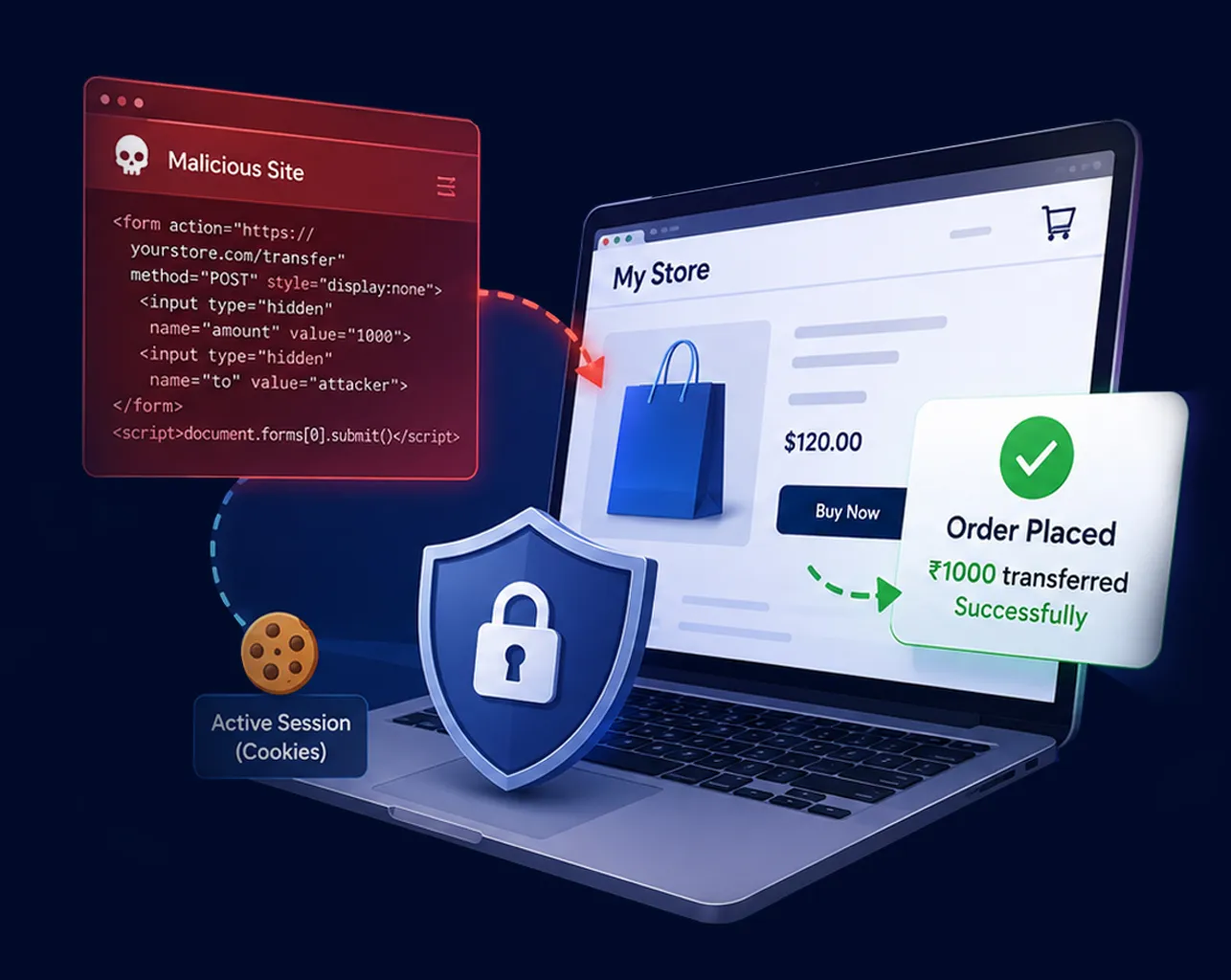
Cross-Site Request Forgery is a web application security vulnerability that occurs when an application does not properly verify whether a request was intentionally submitted by an authenticated user.
Since eCommerce websites rely on authenticated sessions to manage logged-in customers, vendor accounts, and administrative users, secure request verification is essential. When security controls are not implemented correctly, a vulnerability may allow a malicious site or link to trick a logged-in user's browser into submitting unwanted requests, potentially changing account details, placing orders, or altering store settings without the user's knowledge.
Online stores typically contain data across all of these categories — any of which can be exposed through an unaddressed SQL injection vulnerability:
| Data Type | Examples | Risk Level |
|---|---|---|
| Customer Account Information | Names, emails, passwords, addresses | High |
| Order History | Past purchases, payment methods, billing details | High |
| Product Databases | Pricing, inventory levels, vendor costs | Medium |
| Vendor Information | Vendor contracts, commission rates, payout data | High |
| Shipping Details | Delivery addresses, courier integrations | Medium |
| Business Reports | Revenue data, conversion analytics | Medium |
| Administrative Records | Admin credentials, configuration settings | Critical |
Online stores typically expose state-changing actions across all of these categories — any of which can be triggered through an unaddressed CSRF vulnerability:
| Action Type | Examples | Risk Level |
|---|---|---|
| Customer Account Changes | Updating email, password, billing address | High |
| Order & Cart Actions | Adding items, placing orders, applying discounts | High |
| Product Management | Editing pricing, stock levels, listings | Medium |
| Vendor Settings | Payout details, commission settings, store configuration | High |
| Shipping Preferences | Default address, courier configuration | Medium |
| Store Configuration | Theme, layout, and storefront settings | Medium |
| Administrative Actions | Admin user creation, permission changes, configuration edits | Critical |
Unlike a simple website issue, security vulnerabilities can directly impact your customers and revenue. A security incident affecting customer accounts or store configuration can have significant consequences for both customers and business owners — consequences that extend well beyond the initial technical event.
CS-Cart is a powerful and flexible eCommerce platform trusted by businesses worldwide. However, like any web application, website security depends on proper maintenance, updates, customisations, and secure development practices.
Many CS-Cart stores use a combination of the following, all of which can introduce security risks if not reviewed regularly:
| Component | Security Consideration | Review Priority |
|---|---|---|
| Custom Themes | May contain forms or actions that bypass standard request verification | Medium |
| Third-Party Add-ons | External code may not implement CS-Cart's anti-CSRF protections consistently | High |
| Marketplace Integrations | Multi-vendor data flows expand the number of authenticated, state-changing endpoints | High |
| Custom Development Modules | Bespoke logic may bypass core request-verification controls | High |
| Payment Gateway Integrations | Insecure integration points can expose order and transaction workflows | Critical |
Your online store should undergo a professional security review if any of the following apply:
These are the foundational security controls every CS-Cart store should have in place. Together, they form a layered defence that makes CSRF significantly harder to execute successfully.
| Security Practice | What It Does | Priority |
|---|---|---|
| Anti-CSRF Tokens | Unique, unpredictable tokens are included in forms and verified on submission, ensuring requests originate from the legitimate application | Critical |
| SameSite Cookie Attributes | Session cookies are configured to restrict cross-site sending, reducing the ability of external sites to trigger authenticated requests | Critical |
| Origin & Referrer Verification | Incoming requests are checked against expected origin headers to help confirm they originate from the store itself | High |
| Re-authentication for Sensitive Actions | Critical actions such as password or payment changes require the user to reconfirm their identity – limiting damage from any successful exploit | High |
| Regular Security Updates | Keeping the platform, add-ons, and custom components updated to close known vulnerabilities as they are discovered | High |
| Routine Security Assessments | Scheduled reviews that identify new vulnerabilities introduced by updates, new features, or evolving attack techniques | Ongoing |
We help eCommerce businesses strengthen website security through comprehensive assessment and review services — with deep specialisation in CS-Cart's architecture, add-on ecosystem, and marketplace functionality.
Organisations that invest in proactive security reviews consistently report better outcomes across business, compliance, and customer trust dimensions:
| What We Bring | What It Means for You |
|---|---|
| CS-Cart Platform Expertise | We understand CS-Cart's architecture, add-on system, and marketplace functionality in depth — so we know exactly where to look and what vulnerabilities to expect in real-world stores |
| eCommerce-Focused Approach | Our assessments prioritize customer accounts, order data, and business-critical functionality — not generic checklists that miss the vulnerabilities that matter most to online stores |
| Detailed, Actionable Reporting | Every finding is documented with severity, business impact, and clear remediation steps your team can act on — not generic recommendations that require further interpretation |
| Security Best Practices Alignment | All recommendations align with modern web application security principles and are calibrated for the CS-Cart environment specifically |
| Ongoing Remediation Support | We work with your team throughout the assessment and remediation process — from initial findings through to verified resolution and reassessment. |
Your customers trust you with their accounts and orders every time they log in or check out. Protecting that trust requires a proactive approach. Regular security assessments help identify vulnerabilities, strengthen security controls, and reduce business risks before they become costly problems — whether you operate a small online store or a large CS-Cart Multi-Vendor marketplace.
Our XSS testing services help detect and eliminate script injection flaws before attackers can exploit them, strengthening application security and preserving customer confidence.
Ecartify has audited and hardened 100+ CS-Cart stores and Multi-Vendor marketplaces. The team specialises in vulnerability assessments, secure add-on development, and long-term security posture improvement for eCommerce businesses.
Running a successful eCommerce business involves more than managing products and processing orders. Your online store also handles valuable customer information, authenticated sessions, account details, and business-critical data every day. Protecting this information is essential for maintaining customer trust and ensuring smooth business operations.
One of the most common web application security risks is Cross-Site Scripting (XSS). If left unaddressed, this vulnerability can compromise user sessions, affect website functionality, and create serious security concerns for online businesses.
Whether you operate a CS-Cart shopfront, multi-vendor marketplace, or custom e-commerce solution, understanding XSS risks and implementing proactive security measures is crucial for long-term business success.
Cross-Site Scripting is a web application security vulnerability that occurs when an application does not properly handle user-supplied input before displaying it back to other users in the browser.
Since eCommerce websites rely heavily on dynamic content — product reviews, search results, account details, and vendor listings — secure handling of user-generated content is essential. When security controls are not implemented correctly, vulnerabilities may allow malicious scripts to run within a visitor's browser, potentially exposing sensitive session and account information.
Online stores typically carry risk across all of these categories — any of which can be affected through an unaddressed XSS vulnerability:
| Asset Type | Examples | Risk Level |
|---|---|---|
| Customer Sessions | Session cookies, login tokens, active sessions | High |
| Customer Account Information | Profile details, saved addresses, account preferences | High |
| Product Pages & Reviews | Review content, product Q&A, ratings display | Medium |
| Vendor Dashboards | Vendor profile fields, product listings, messages | High |
| Search & Filter Pages | Search result rendering, query parameters | Medium |
| Contact & Form Pages | Contact forms, feedback forms, chat widgets | Medium |
| Administrative Sessions | Admin panel cookies, configuration access | Critical |
Unlike a simple website issue, security vulnerabilities can directly impact your customers and revenue. A security incident affecting customer sessions or business data can have significant consequences for both customers and business owners — consequences that extend well beyond the initial technical event.
CS-Cart is a powerful and flexible eCommerce platform trusted by businesses worldwide. However, like any web application, website security depends on proper maintenance, updates, customisations, and secure development practices.
Many CS-Cart stores use a combination of the following, all of which can introduce security risks if not reviewed regularly:
| Component | Security Consideration | Review Priority |
|---|---|---|
| Custom Themes | May contain unsanitised output in templates, leading to script execution | Medium |
| Third-Party Add-ons | External code may not follow CS-Cart's security standards | High |
| Marketplace Integrations | Multi-vendor data flows expand the attack surface for stored XSS | High |
| Custom Development Modules | Bespoke logic may bypass core output encoding controls | High |
| Customer-Facing Forms | Reviews, comments, and contact forms can become injection points | Critical |
Your online store should undergo a professional security review if any of the following apply:
| Indicator | Why It Matters | Priority |
|---|---|---|
| Never assessed | The website has never undergone a security assessment | High |
| Recent changes | New features or customisations have recently been implemented | High |
| Multiple add-ons | Several third-party add-ons are installed | Medium |
| User-generated content | The store accepts reviews, comments, or similar input | High |
| Infrequent updates | Security updates are applied infrequently | Medium |
| Active customer sessions | The website manages authenticated customer accounts | Critical |
| Long-running store | The platform has operated for years without review | Medium |
These are the foundational security controls every CS-Cart store should have in place. Together, they form a layered defence that makes XSS significantly harder to execute successfully.
| Security Practice | What It Does | Priority |
|---|---|---|
| Secure Input Validation | User-supplied information is validated and sanitized before being stored or processed by the application | Critical |
| Output Encoding | Data is safely encoded before being rendered in the browser, preventing scripts from executing | Critical |
| Content Security Policy (CSP) | Browser-level controls that restrict which scripts and resources are allowed to run on a page | High |
| Secure Cookie Attributes | Session cookies configured to reduce the impact of any successful script execution | High |
| Regular Security Updates | Keeping the platform, add-ons, and custom components updated to close known vulnerabilities as they are discovered | High |
| Routine Security Assessments | Scheduled reviews that identify new vulnerabilities introduced by updates, new features, or evolving attack techniques | Ongoing |
We help eCommerce businesses strengthen website security through comprehensive assessment and review services — with deep specialisation in CS-Cart's architecture, add-on ecosystem, and marketplace functionality.
Organisations that invest in proactive security reviews consistently report better outcomes across business, compliance, and customer trust dimensions.
Cross-Site Scripting is one of the most common — and most preventable — web application vulnerabilities. For CS-Cart stores, the highest-risk areas are typically the customisations layered on top of the core platform: themes, add-ons, custom development, and any feature that displays user-generated content.
Validate and encode all user-supplied input before it is stored or displayed. Apply secure cookie attributes and consider a Content Security Policy. Keep the platform, theme, and add-ons updated. Review every customer-facing input field — reviews, comments, search, forms — as part of a structured assessment. Treat security as an ongoing practice, not a one-time task.
Protect your customers, sessions, and business data with a comprehensive CS-Cart security assessment. Our specialists identify vulnerabilities like Cross-Site Scripting before they become real-world incidents, and provide a clear, prioritised remediation roadmap.
We identify SQL Injection vulnerabilities in your applications to reduce risk, protect sensitive data, and maintain customer trust
Our security team has audited and hardened 100+ CS-Cart stores and Multi-Vendor marketplaces. We specialise in vulnerability assessments, secure add-on development, and long-term security posture improvement for eCommerce businesses.
Running a successful eCommerce business involves more than managing products and processing orders. Your online store also handles valuable customer information, order details, user accounts, and business-critical data every day. Protecting this information is essential for maintaining customer trust and ensuring smooth business operations.
One of the most common web application security risks is SQL Injection (SQLi). If left unaddressed, this vulnerability can expose sensitive information, affect website functionality, and create serious security concerns for online businesses.
Whether you operate a CS-Cart shopfront, multi-vendor marketplace, or custom e-commerce solution, understanding SQL injection risks and implementing proactive security measures is crucial for long-term business success.
SQL injection is a web application security vulnerability that occurs when an application does not properly handle user-supplied input before interacting with a database.
Since eCommerce websites rely heavily on databases to manage products, customers, orders, inventory, and business information, secure database communication is essential. When security controls are not implemented correctly, vulnerabilities may allow unauthorised interactions with the database, potentially exposing sensitive business information.
Online stores typically contain data across all of these categories — any of which can be exposed through an unaddressed SQL injection vulnerability:
| Data Type | Examples | Risk Level |
|---|---|---|
| Customer Account Information | Names, emails, passwords, addresses | High |
| Order History | Past purchases, payment methods, billing details | High |
| Product Databases | Pricing, inventory levels, vendor costs | Medium |
| Vendor Information | Vendor contracts, commission rates, payout data | High |
| Shipping Details | Delivery addresses, courier integrations | Medium |
| Business Reports | Revenue data, conversion analytics | Medium |
| Administrative Records | Admin credentials, configuration settings | Critical |
Unlike a simple website issue, security vulnerabilities can directly impact your customers and revenue. A security incident affecting customer or business data can have significant consequences for both customers and business owners — consequences that extend well beyond the initial technical event.
CS-Cart is a powerful and flexible eCommerce platform trusted by businesses worldwide. However, like any web application, website security depends on proper maintenance, updates, customisations, and secure development practices.
Many CS-Cart stores use a combination of the following, all of which can introduce security risks if not reviewed regularly:
| Component | Security Consideration | Review Priority |
|---|---|---|
| Custom Themes | May contain unsanitised input fields or template vulnerabilities | Medium |
| Third-Party Add-ons | External code may not follow. CS-Cart's security standards | High |
| Marketplace Integrations | Multi-vendor data flows expand the attack surface | High |
| Custom Development Modules | Bespoke logic may bypass core security controls | High |
| Payment Gateway Integrations | Insecure integration points can expose financial transaction data | Critical |
Your online store should undergo a professional security review if any of the following apply:
These are the foundational security controls every CS-Cart store should have in place. Together, they form a layered defence that makes SQL injection significantly harder to execute successfully.
| Security Practice | What It Does | Priority |
|---|---|---|
| Secure Input Validation | User-supplied information is validated and sanitized before being processed by the application or passed to the database | Critical |
| Parameterized Database Queries | Secure database interaction methods that separate SQL commands from user data, preventing injection at the query level | Critical |
| Principle of Least Privilege | Database accounts are granted only the permissions necessary to perform their required functions – limiting damage from any successful exploit | High |
| Secure Error Handling | Technical database error information is never exposed to website visitors, removing a key tool attackers use to map vulnerabilities | High |
| Regular Security Updates | Keeping the platform, add-ons, and custom components updated to close known vulnerabilities as they are discovered | High |
| Routine Security Assessments | Scheduled reviews that identify new vulnerabilities introduced by updates, new features, or evolving attack techniques | Ongoing |
We help eCommerce businesses strengthen website security through comprehensive assessment and review services — with deep specialisation in CS-Cart's architecture, add-on ecosystem, and marketplace functionality.
Organisations that invest in proactive security reviews consistently report better outcomes across business, compliance, and customer trust dimensions:
Imagine an eCommerce website preparing for a festive sale campaign. Normally, the website receives around 200 visitors per hour, but during the sale, traffic increases to thousands of users within minutes.
Without proper load testing, the checkout process may slow down, payment APIs may fail, or the database may become overloaded. This can directly impact sales and customer trust.
Using JMeter, testers can simulate thousands of users browsing products, adding items to cart, and completing checkout. The results help developers optimize server configuration, caching, APIs, and database queries before the sale goes live.
Improve your website performance, identify bottlenecks, and prepare your application for high traffic using professional load testing solutions with Apache JMeter and modern performance optimization techniques.